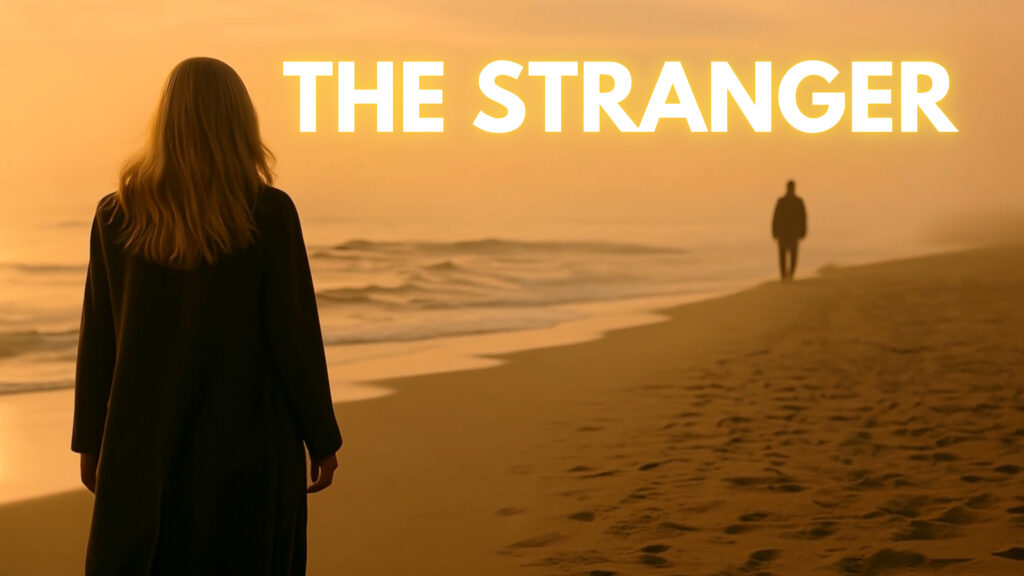
VIDART is a Madison, Wisconsin production company that makes video with generative AI — commercials, explainers, previsualization, documentary sequences and full-length films — and finishes it the way we finish everything else: a written script, a real edit, a color grade and a sound mix. We have shipped two generative feature films, The Reality of Time (2024, narrated by John de Lancie) and The Stranger (2025), so the pipeline you hire is one that has already carried a project from first prompt to a 132-minute master.
Who hires us: agencies and brands that need a spot without a location shoot, studios and producers who want previs or a sizzle before green-light, documentary teams who need to show something no camera recorded, and companies that need a lot of short-form video on a schedule a crew cannot keep.
- Fully generative — every frame produced in AI video tools, cut and finished by us.
- Hybrid — live-action footage from our crew, extended, replaced or augmented with generated shots.
- AI-assisted post — voice, dubbing, lip-sync, clean-up, set extension and upscaling on footage you already have.
What we produce with generative AI
AI commercials and brand films
Thirty-second spots, pre-roll and social cutdowns built from generated shots: any location, any era, any weather, no permits, no travel. Delivered in every aspect ratio the campaign runs in.
Explainers and product video
Software, medical devices, industrial processes and things that are too small, too large or too abstract to film. Generated visuals, motion graphics and narration cut to your script.
Previsualization and pitch films
Animatics, look-development reels and proof-of-concept scenes for features, series and campaigns, so a director, a client or a financier can see the film before a shoot day is booked.
Documentary reconstruction
Historical events, scientific phenomena and scenes with no archive, rendered as cinematic sequences rather than stock footage. The Reality of Time was made this way end to end.
Voice, dubbing and lip-sync
Synthetic narration in a licensed voice, multilingual dubs of existing videos with matched lip movement, and voice clean-up for interviews recorded in poor conditions.
Music videos and visual albums
Fully generated or hybrid music videos cut to the track, with consistent characters and worlds across a whole release.
Narrative shorts and features
Development, generation, edit and finishing for AI-driven narrative work, delivered to festival and streaming spec. VIDART’s own generative features are on this page.
Short-form at volume
Weekly or daily social video for brands and creators: a style system built once, then produced on a schedule with consistent characters, products and look.
Our generative AI films
The clearest proof of a pipeline is a finished film. Both features below were written, generated, edited and finished by VIDART; each has its own page with synopsis, credits and where to watch.
The Reality of Time (2024)
A 110-minute cinematic documentary on the nature of time, narrated by John de Lancie, whose visuals were created and animated entirely with generative AI video. Honorable Mention, Athens International 2024. Film page and where to watch.
The Stranger (2025)
A 132-minute generative narrative feature inspired by Camus, set in an alternate post-pandemic 1981 on the North African coast; now on its festival run. Next up: Tristan MacArthur in the 36th Century, in production for 2027. Film page.
How a generative AI project runs
- Brief and script — what it is for, where it runs, how long, in what voice. We write or rewrite the script and lock a shot list before anything is generated; good generative video starts with a better script, not a better prompt.
- Look development — a set of style frames for the world, the characters and the products, approved before shot generation. Character and product consistency is designed in here, not patched in later.
- Shot generation — each shot is generated, reviewed and regenerated until it holds up at full resolution; hands, text, logos and product details get the most passes. Live-action plates are shot by our crew where a real face, a real product or a real place matters.
- Performance and voice — narration or dialogue recorded with a human performer or produced with a licensed synthetic voice, then lip-synced to picture where characters speak on camera.
- Edit, grade, mix, upscale — the generated material is cut like any other footage, color-graded for consistency, mixed with music and sound design, and upscaled to 4K.
- Delivery — masters and cutdowns for broadcast, web and each social platform, plus the project archive: approved style frames, prompts, seeds and model versions so the look can be reproduced for the next piece.
Tools and pipeline
We work in Runway, Kling, Veo, Sora, Pika, Hedra and Stable Diffusion for picture and in ElevenLabs for voice, choosing the model per shot rather than per project: some tools hold a character across shots better, some handle camera moves, water or crowds better, and the mix changes every few months as the models do. Generation is only part of the job; the rest is the same post-production we use on live-action films — conforming, color grading, sound design, mixing, motion graphics and mastering to the spec your platform requires.
Because we also run a live-action crew with cinema cameras, lighting, audio and FAA Part 107 drones, hybrid projects do not require a second vendor: we shoot the plates, generate the rest and finish both in one timeline.
Rights, consent and disclosure
- No one’s likeness without consent. We do not generate a real person’s face or clone a voice without that person’s written permission, including public figures. Guest narration on The Reality of Time was recorded by John de Lancie himself.
- Licensed tools and voices. Generation runs on commercial plans whose terms permit commercial use, and synthetic voices come from licensed libraries or a performer who has signed a release.
- Disclosure. Where a platform, broadcaster or jurisdiction requires AI-generated content to be labelled, we build the label into the deliverable and tell you where it is required.
- Your brand, your assets. Logos, products and brand characters are generated from your approved references, and the project archive (style frames, prompts, seeds, model versions) is delivered with the masters so the look belongs to you.
- Human in every chair that matters. Script, direction, editing, grading and mixing are done by people; the models are a camera, not the crew.
Generative AI, live action or hybrid?
Generative AI is not the right tool for every video. Here is how we advise clients to choose; most projects over a certain size end up hybrid.
| Generative AI | Live action | Hybrid | |
|---|---|---|---|
| Best for | Impossible or expensive locations, abstract concepts, previs, high-volume short-form, historical or scientific scenes | Real people, real products, testimonials, events, anything where authenticity is the point | Spots that need a real face or product plus worlds a budget could not build |
| Locations, sets, travel | None required | Scouted, permitted, built or travelled to | One controlled shoot day, the rest generated |
| Changes after approval | Regenerate a shot; no reshoot | Reshoot or cut around it | Generated shots change freely; plates are fixed |
| Timeline | Days to a few weeks, depending on length and revision rounds | Pre-production plus shoot plus 2–6 weeks of post | Shoot day plus generative post |
| Likeness and rights | No real person’s face or voice without written consent; licensed tools and voices; disclosure where platforms require it | Standard talent releases and location agreements | Both |
| Cost driver | Finished runtime, shot count, character consistency, revision rounds | Crew size, shoot days, talent, locations, travel | Shoot days plus generative scope |
Pricing
Generative AI projects are quoted per project after a short brief, because the cost is driven by finished runtime, the number of distinct shots and characters, how much live-action is involved and how many revision rounds you want built in. A 30-second fully generated spot and a ten-minute explainer are very different jobs; both are quoted within a business day.
Reference points that do not change: live-action components are billed at our standard crew rates — $1,500 for a half day, $3,000 for a full day for a single operator, equipment included, with no travel fee anywhere in Wisconsin, Illinois, Iowa, Minnesota, Indiana, Missouri or Michigan. A $300 deposit holds a start date. Retainers for weekly or monthly short-form output are priced per month. See the pricing page for photo and video day rates and add-ons.
Where we work
Generative projects are produced from Madison, Wisconsin for clients anywhere, with review rounds on shared links. When a project needs a live-action shoot we cover Madison, Milwaukee, Chicago, Minneapolis and the rest of the Midwest with no travel fee, and crew regularly in Chicago, New York, Los Angeles, Atlanta and New Orleans. See the full service area.
Frequently asked questions
What is generative AI video production?
Video whose imagery is created by AI models from text, images or reference footage rather than recorded with a camera, then edited, graded, mixed and mastered like conventional footage. VIDART does fully generative work, hybrid work that combines it with live action, and AI-assisted post-production on footage you already have.
How much does an AI-generated commercial or explainer cost?
It is quoted per project after a short brief, because runtime, shot count, character consistency and revision rounds drive the cost more than anything else. Live-action components are billed at our standard crew rates of $1,500 for a half day or $3,000 for a full day, equipment included. Quotes come back within a business day.
How long does a generative AI video take?
A short spot or explainer usually takes days to a few weeks depending on length and the number of review rounds; a long-form piece follows the schedule we agree at the brief. There is no scouting, permitting, casting or travel, which is where most of the time saving comes from.
Can you keep the same character, product or logo consistent across shots?
Yes, and it is the part of the job that separates a finished piece from a demo. Consistency is designed in during look development with reference sheets and approved style frames, then enforced shot by shot. Real products and logos are often shot as live-action plates and composited for exact fidelity.
Can you use a real person's face or voice?
Only with that person’s written consent. We do not generate the likeness or clone the voice of a real individual, including public figures, without a signed release, and we use licensed synthetic voices or recorded human performers otherwise.
Which AI video tools do you use?
Runway, Kling, Veo, Sora, Pika, Hedra and Stable Diffusion for picture and ElevenLabs for voice, chosen per shot. The finishing – edit, color, sound, graphics, mastering – is conventional post-production.
Have you actually made anything with it?
Two feature films: The Reality of Time (2024), a 110-minute generative documentary narrated by John de Lancie that received an Honorable Mention at Athens International, and The Stranger (2025), a 132-minute generative narrative feature now on its festival run. A third, Tristan MacArthur in the 36th Century, is in production. Trailers are on this page.
Do you work with clients outside Madison?
Yes. Generative work is produced remotely for clients anywhere; review rounds run on shared links with timecoded notes. Hybrid projects that need a live shoot are covered with no travel fee across Wisconsin, Illinois, Iowa, Minnesota, Indiana, Missouri and Michigan, and we regularly shoot in Chicago, New York, Los Angeles, Atlanta and New Orleans.
Conventional production too
The same team produces live-action commercials, corporate video and documentaries, and photographs and films weddings and events across the Midwest.
Start a generative AI project
Send a paragraph about what you are making, where it will run and when you need it. We reply within a business day with a scope and a number.